
Extended power outages are no longer rare inconveniences. With hurricanes, wildfires, ice storms, and heatwaves increasing in frequency and intensity, a reliable backup power source has shifted from a luxury to a necessity for household resilience. The market offers a dizzying array of options, from portable gas generators to whole-home battery systems. Selecting the right home backup power solutions requires a clear assessment of your specific needs, the local threats you face, and a realistic understanding of each technology’s capabilities and limitations. This process is not about finding the most powerful unit, but the most appropriate one for your safety, budget, and lifestyle during a crisis.
A thoughtful selection balances immediate power needs with long-term usability. It involves more than comparing wattage ratings; it requires planning for fuel storage, understanding installation requirements, and prioritizing the appliances that are truly essential. Whether you need to keep a sump pump running during a flood, a refrigerator cold during a heatwave, or medical equipment operational at all times, the right choice provides peace of mind. Let’s break down the critical factors to consider so you can invest in a system that won’t let you down when the grid goes dark.
Understanding Your Essential Power Needs
The first, and most crucial, step is calculating what you need to power. Creating a detailed list of essential appliances will prevent you from overspending on excessive capacity or, worse, buying an underpowered system that fails to meet your basic needs.
Conduct a Load Assessment
Start by identifying the appliances and devices you cannot live without during an outage. Common essentials include refrigerators, freezers, well pumps, sump pumps, furnace blowers, select lighting, and communication devices like routers and phone chargers. For those with health concerns, this list must include medical equipment such as CPAP machines or oxygen concentrators.
Next, determine both the starting (surge) and running (rated) watts for each item. The starting wattage, often two to three times higher than the running wattage, is the brief burst of power needed to start motors in compressors or pumps. Your backup system must be able to handle the largest expected surge. You can find wattage information on the appliance’s nameplate or in its manual. Sum the running watts of all items you plan to run simultaneously, and note the highest individual surge wattage. This total defines your minimum capacity requirement.
Prioritize Function Over Convenience
Be realistic. You likely do not need to power your entire home. Prioritizing circuits allows a more targeted and affordable solution. Do you need the HVAC system, or can you manage with a few room fans or a small space heater? Is the electric stove essential, or can you use a propane camp stove for cooking? Defining these priorities narrows the field of suitable backup power solutions considerably, focusing your budget on reliable performance for critical loads rather than whole-home comfort.
Evaluating Backup Power Technologies
Once you know your wattage requirements, you can evaluate the different types of backup power systems. Each technology has distinct advantages, trade-offs, and ideal use cases.
Portable Gas Generators
These are the most common and cost-effective entry point for backup power. Powered by gasoline, propane, or dual-fuel engines, they offer high output (often 7,000 watts or more) at a relatively low upfront cost. Their primary drawback is the need for manual operation: they must be started outdoors, kept at least 20 feet from the home to avoid carbon monoxide poisoning, and refueled every 8-12 hours. Storing sufficient fuel safely is a significant logistical challenge during extended outages. They are best for intermittent use to power essentials via extension cords or a manual transfer switch.
Inverter Generators
A subclass of fuel-powered generators, inverter models produce cleaner, more stable “pure sine wave” electricity that is safe for sensitive electronics like laptops and flat-screen TVs. They are typically quieter, more fuel-efficient, and lighter than conventional portable generators, but they come at a higher cost per watt. They are an excellent choice for powering modern electronics and are often used in RVs or for tailgating, but they share the same fuel and manual operation requirements as standard portables.
Battery Power Stations (Solar Generators)
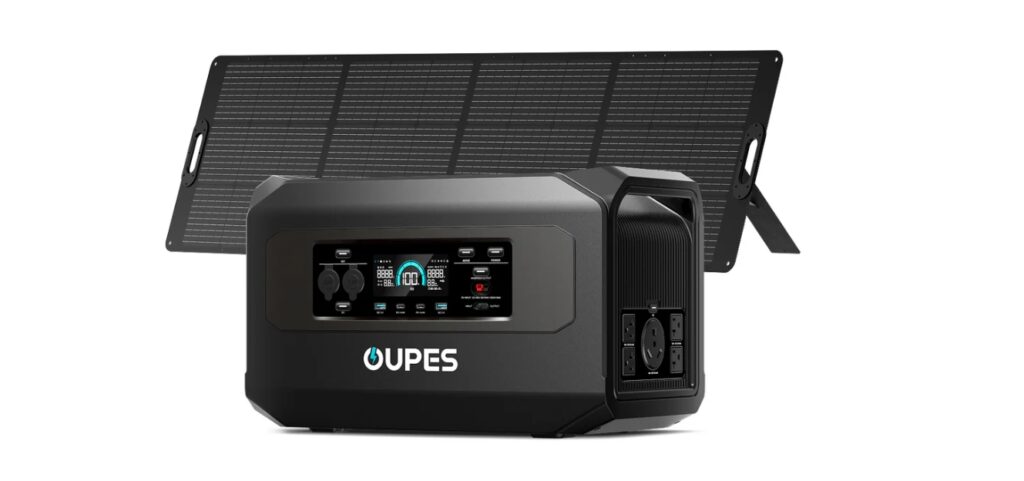
This category has seen rapid advancement. These are integrated, silent systems comprising a large-capacity battery, an inverter, and charge controllers. They can be charged via a wall outlet, a car charger, or, most compellingly, solar panels. Units like the OUPES Mega 2 Pro power station exemplify this technology, offering substantial capacity (2,048Wh) and output (2,500W) in a portable, emissions-free package. They require no fuel, produce no fumes, and need minimal maintenance. The limitation is energy storage: once the battery is depleted, you must wait for sunlight or grid power to recharge. They are ideal for shorter outages, indoor use, and as a clean complement to other systems.
Standby Generators
These are permanent, automatic solutions. Installed outside the home like a central air conditioning unit and connected to a natural gas line or large propane tank, they can power an entire house or selected circuits. They automatically start within seconds of a grid failure and switch off when utility power returns. They represent the highest level of convenience and power but also the highest upfront and installation costs, requiring professional permitting and setup. They are the definitive solution for those who cannot afford any interruption in power.
Key Selection Criteria Beyond Wattage
Capacity is just one metric. Several other factors are equally important in selecting a durable and safe home backup power solution.
Fuel Source and Runtime: Consider availability and safety. Gasoline can be difficult to obtain and dangerous to store in large quantities. Propane has a longer shelf life. Natural gas offers unlimited runtime but depends on a pipeline that could also be compromised. Battery systems depend on sunshine or a functional grid for recharging. Your local disaster profile should guide this: in hurricane-prone areas, gasoline may be scarce for weeks, making propane or solar-augmented systems more resilient.
Transfer Method and Installation: How will you connect the generator to your home? Using extension cords through a window is a temporary, high-risk method only suitable for a couple of appliances. A manual transfer switch, installed by an electrician, is safer and allows you to power hardwired circuits like your furnace. An automatic transfer switch is used with standby generators. Proper installation is non-negotiable for safety and compliance with local codes.
Noise and Emissions: In densely populated neighborhoods or during a prolonged community-wide outage, a loud generator can become a nuisance. Inverter generators and battery stations operate quietly. Emissions are a critical indoor safety issue; any combustion generator must be operated outdoors and away from air intakes.
Maintenance and Durability: A system that fails to start after months in storage is worthless. All generators require periodic exercise (running under load) and maintenance like oil changes. Battery systems require less maintenance but have a lifespan defined by charge cycles. Choose reputable brands known for reliability and service support, such as those offering comprehensive OUPES portable power solutions.
Safety and Legal Considerations
Ignoring safety and local regulations can lead to property damage, injury, or even death. These aspects are as important as the technical specifications.
Carbon Monoxide (CO) Poisoning: This colorless, odorless gas from combustion engines kills people every year during outages. Never operate a gasoline or propane generator inside a home, garage, basement, or even near open windows or vents. Install battery-operated CO detectors on every floor of your home and test them regularly.
Electrical Backfeed: “Backfeeding” power into your home’s wiring via a dryer outlet without a proper transfer switch is illegal and extremely dangerous. It can electrocute utility workers repairing lines and cause a fire in your home. Always use a certified transfer switch installed by a licensed electrician.
Local Ordinances and HOA Rules: Many municipalities have noise ordinances that limit generator operation hours. Homeowners Associations (HOAs) may have rules regarding the permanent installation of standby generators. Check these regulations before purchasing a system to avoid fines or forced removal.
Creating a Comprehensive Emergency Power Plan
Your backup power system is just one component of a broader emergency plan. Integrate it with other preparedness steps for maximum effectiveness.
Store at least one week’s worth of fuel for your generator, using stabilizers for gasoline and rotating your supply. For battery systems, have a clear plan for recharging, such as a dedicated set of portable solar panels. Create a pre-outage checklist that includes testing your system quarterly, checking fuel levels at the start of storm season, and ensuring all necessary cords and adapters are accessible.
Practice using your system before an emergency. Know how to start it safely, connect it properly, and prioritize your loads. Everyone in the household should understand the basic operation and safety rules. Finally, consider layering solutions: a large battery station can silently power lights and devices overnight, while a propane generator can be used during the day to recharge it and run high-load appliances, creating a more flexible and sustainable response to a multi-day outage.
Frequently Asked Questions
How many watts do I need to power my refrigerator and a few lights?
Most modern refrigerators require 600-800 running watts with a starting surge of 1,200-2,000 watts. LED lights use minimal power, about 10 watts each. A reliable 2,200-watt generator or a 2,000-watt-hour battery station could handle this load comfortably, with some capacity to spare for charging phones.
Can I use a portable power station to run my home’s central air conditioning?
Almost certainly not. Central AC units have very high starting surges, often requiring 4,000-7,000 watts. Even the largest portable battery stations cannot typically handle this load. You would need a large standby generator or must rely on smaller, efficient window units or fans during an outage.
What is the most important safety rule for using a gas generator?
The absolute rule is to always operate it outdoors, at least 20 feet from your home, with the exhaust directed away from any windows, doors, or ventilation intakes. Combined with this, never refuel a hot generator—turn it off and let it cool completely to prevent fire.
How long can a whole-house battery backup last during an outage?
Runtime depends entirely on the battery’s capacity (in kilowatt-hours) and what loads you are powering. A 10 kWh system, a common size, might power essential circuits (refrigeration, lights, well pump) for 12-24 hours. To extend this indefinitely, you need a renewable recharge source, like solar panels.
Do I need an electrician to install a backup power system?
For any system that connects directly to your home’s electrical panel—including via a manual transfer switch—yes, you must hire a licensed electrician. This ensures the installation is to code, prevents backfeed, and protects your home and utility workers. Only systems used with extension cords for individual appliances do not require professional installation.
Are solar-powered backup systems reliable during stormy weather?
They can be, with planning. A quality solar generator charged fully before the storm will provide power even if skies are cloudy for a day or two. For longer outages with poor sun, having a dual-charging option (like a car charger or the ability to connect to a gas generator for recharging) is essential for reliability.
Conclusion
Selecting the best home backup power solutions is a strategic decision that directly impacts your family’s safety and comfort during disruptive extreme weather events. The optimal choice is not universal; it is a personal equation balancing your essential power needs, budget, risk tolerance, and local conditions. A thorough load assessment lays the groundwork, followed by a clear-eyed comparison of technologies—weighing the raw power and runtime of fuel generators against the clean, quiet, but storage-limited nature of modern battery systems.
Ultimately, the best system is one you understand, can operate safely, and have maintained properly. It should be integrated into a broader preparedness plan that includes fuel management, regular testing, and household drills. Investing time in this selection process today ensures that when the next severe storm knocks out the grid, your response will be calm, controlled, and powered by a solution you can trust to deliver when it matters most.