
True off-grid independence requires more than just raw power capacity. It demands a unit designed for the realities of movement over uneven terrain, variable weather, and unpredictable access to resources. The essence of portable power isn’t just what it can do, but how easily it can be taken to where it’s needed most. This is where the concept of portability moves beyond a simple spec sheet and becomes a critical operational advantage.
For adventurers, remote workers, and overlanders, unlocking this portability advantage means evaluating a power station’s entire ecosystem: its physical design, its power delivery and management, and its real-world application in challenging environments. A station that excels in these areas doesn’t just provide electricity; it enables and simplifies the experience it’s meant to support.
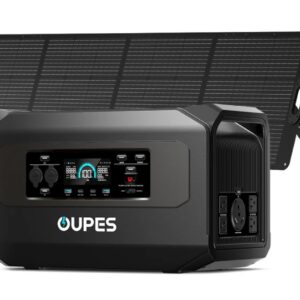
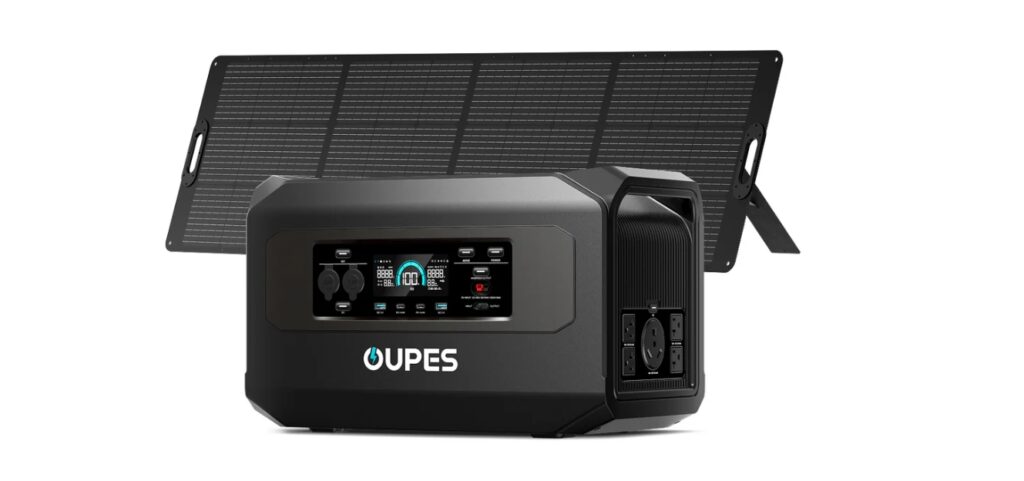
This analysis focuses on how the OUPES Mega 2 Pro power station embodies this principle. We’ll examine the specific design and engineering choices that make it a standout for mobile use, compare its capabilities to other solutions, and outline the scenarios where its portability becomes its greatest asset.
Engineering for Mobility: Beyond the Wheeled Cart
A common misconception is that any power station with wheels qualifies as “portable.” True mobility engineering considers the entire user journey, from vehicle loading to final placement in camp.
The Center of Gravity and Handling
The Mega 2 Pro’s 2048Wh capacity necessitates a substantial battery pack. Its designers mitigated the weight through a low center of gravity and a balanced chassis. The telescoping handle integrates directly into a stable frame, allowing the 55-pound unit to be tilted and rolled with controlled effort. This is a significant advantage over bulkier, top-heavy units that become unwieldy on slopes or soft ground like sand or thick grass.
Environmental Resilience for the Field
Portability means exposure. A rubberized, textured finish provides grip for handling with gloves and resists scuffs during transport. Critical ports are protected by robust, hinged covers that shield against dust and moisture splash—a vital feature not always present on home-backup-focused units. While not fully submersible, this level of ingress protection is tailored for the incidental exposures of outdoor use.
Power Management: The Intelligence Behind Portability
A portable power station’s utility is defined by how intelligently it manages its finite energy reserves. Efficient power conversion and flexible input options directly extend operational time in the wild.
Pure Sine Wave Inverter Efficiency
The 2500W pure sine wave inverter is the core of the Mega 2 Pro’s capability. Beyond simply being safe for sensitive electronics like laptops and camera gear, a high-efficiency inverter wastes less energy as heat during conversion. This preserves battery capacity for actual runtime, meaning fewer recharge cycles are needed. When every watt-hour counts, this efficiency is a silent but critical component of portable endurance.
Multi-Method Recharging Flexibility
True portability is undermined by a single, slow recharging method. The Mega 2 Pro’s strength lies in its multi-path recharge strategy. Solar input up to 1500W allows for meaningful off-grid replenishment on a sunny day. A 30A DC car input provides a viable top-up while driving between sites. The fast AC wall recharge capability (0-80% in approximately 1.5 hours) is the linchpin, enabling rapid refueling during a short town stop. This triad of options ensures you are rarely stranded without a viable way to restore power, adapting to whatever infrastructure is momentarily available.
Operational Scenarios: Where Portability Creates Advantage
The theoretical benefits of a portable design crystallize in specific use cases. Here, the Mega 2 Pro transitions from a capable power bank to an enabling tool.
Extended Backcountry Base Camping
For kayaking, climbing, or fishing trips where a vehicle may be left at a trailhead, transporting a heavy power source to a remote base camp is a traditional challenge. The Mega 2 Pro’s wheeled design allows one person to move it along a trail or across a beach. Once in camp, it can reliably power a full-sized cooler, LED camp lighting, device charging, and even a small induction cooktop or electric kettle, eliminating the need for propane and open flames. Its quiet operation preserves the natural soundscape, a luxury generators cannot offer.
Remote Digital Nomad Worksites
A professional working from a van, tiny cabin, or temporary field office requires uninterrupted, clean power. The station can run a monitor, laptop, router, and mobile hotspot simultaneously for a full workday and beyond. The OUPES Guardian 6000 V2 represents the next tier for semi-permanent installations, but the Mega 2 Pro’s balance of capacity and mobility is ideal for locations that change weekly or monthly. The ability to quickly recharge via solar during the workday further decouples the user from the electrical grid.
Event and Pop-Up Support
Photographers, vendors, or medical personnel at remote events need dependable, silent power. The unit can be easily positioned to run lighting arrays, point-of-sale systems, or medical devices without the noise, fumes, or fire risk of a gas generator. Its professional appearance and silent operation make it suitable for settings where client perception matters.
Comparing Portable Philosophies: Capacity vs. Maneuverability
The portable power market offers a spectrum. Understanding where the Mega 2 Pro sits helps clarify its ideal user profile.
On one end are compact, sub-500Wh power banks. They are supremely portable but lack the capacity for sustained appliance use or multi-day device support. On the other end are massive 5kWh+ units like the Guardian 6000 V2, designed for whole-home backup or semi-permanent off-grid setups; their transport typically requires a dedicated cart or vehicle modification.
The Mega 2 Pro occupies the crucial middle ground. Its 2048Wh capacity is substantial enough for serious applications, yet its form factor remains within the bounds of single-person mobility. It makes the strategic trade-off of not being the absolute largest capacity available in favor of remaining genuinely manageable. For users whose primary use case involves regular movement, this is the correct compromise.
Maximizing Your Field Use: Practical Tips
To fully unlock the portability advantage, user practices must complement the hardware.
Pre-Trip Power Planning: List every device you’ll run, noting its wattage and estimated runtime. Sum the total watt-hours needed per day. With a 2048Wh usable capacity, this simple calculation prevents unexpected depletion and informs your recharging strategy.
Solar Array Positioning: If using solar, invest in a folding panel with a high conversion efficiency. Position it for maximum sun exposure during peak daylight hours. Even a few hours of optimal charging can significantly extend your stay.
Temperature Awareness: Lithium batteries perform best in moderate temperatures. In extreme cold, keep the unit insulated when not in use. In intense heat, provide shade. This preserves long-term battery health and ensures rated performance.
Frequently Asked Questions
How long can the OUPES Mega 2 Pro power a standard refrigerator?
A modern, energy-efficient 120V refrigerator might use between 50-150 watts while running. Assuming a 100-watt average draw and factoring in the compressor’s cycling (it runs about 30-40% of the time), the Mega 2 Pro could theoretically power it for 20 to 30 hours. Always check your appliance’s specific wattage for an accurate estimate.
Can it be used while recharging from solar panels?
Yes, pass-through charging is fully supported. The station can simultaneously power your devices and recharge its internal battery from solar, AC, or DC inputs. This is essential for maintaining power during long, sunny days in the field.
Is the unit safe to use inside a tent or vehicle?
Absolutely. Unlike fuel-powered generators, it produces zero emissions, no fumes, and operates silently. It is perfectly safe for use in enclosed spaces like tents, camper vans, or car interiors, provided it is kept dry and in a well-ventilated area to manage normal heat dissipation.
What is the real-world weight and dimension impact for transport?
At approximately 55 pounds and with dimensions similar to a large piece of carry-on luggage (though thicker), it is transportable but requires consideration. The telescoping handle and wheels make it manageable on hard surfaces, but lifting it into a high SUV or over obstacles will require some strength.
How does its portability compare to a traditional gas generator?
There is no comparison in terms of convenience. The Mega 2 Pro requires no fuel, no oil, no pull-starts, and no maintenance. It is instantly ready, silent, and can be placed anywhere. The trade-off is the finite energy storage versus a generator’s theoretically unlimited runtime with fuel cans.
Conclusion
The portability advantage of a power station like the OUPES Mega 2 Pro is not a minor feature; it is the foundational characteristic that unlocks its potential. By marrying a substantial 2048Wh capacity with thoughtful design elements like a balanced wheeled chassis, robust construction, and intelligent power management, it solves the critical problem of bringing serious off-grid power to where it’s actively needed.
This advantage manifests as greater freedom and simplicity for the user. It enables longer stays in pristine locations, supports professional work in unconventional settings, and provides reliable emergency power that can be easily repositioned as situations evolve. For those whose energy needs are defined by movement and adaptability, choosing a station engineered with this level of mobile intent is the decisive factor. It transforms a utility into a seamless extension of your capability in the wild.